

History, and Engineering Marvel
Nestled within the limestone landscape of the Quercy region in southwestern France, just a short distance from the medieval pilgrimage town of Rocamadour, lies one of Europe’s most breathtaking natural subterranean wonders: the Gouffre de Padirac (Gouffre de Padirac). As the premier underground chasm in France and among the most significant in the continent, this subterranean marvel invites travelers, geologists, and adventurers alike to descend more than 100 meters beneath the surface into a realm sculpted by water, time, and tectonic forces over millions of years.
Geographical Context and Geological Formation
Location and Surface Topography
The Gouffre de Padirac is located in the department of Lot in Southwest of France, within the Occitanie region of France, specifically on the Causse de Gramat—a vast, arid limestone plateau characterized by karst topography. The surface landscape surrounding the chasm is typified by dry stone walls, sparse vegetation adapted to thin soils, and rolling hills where precipitation rarely forms surface streams. Instead, rainwater immediately infiltrates the porous Jurassic limestone bedrock, carving an intricate, invisible plumbing system of subterranean rivers, caves, and avens (vertical shafts).
The Great Chasm
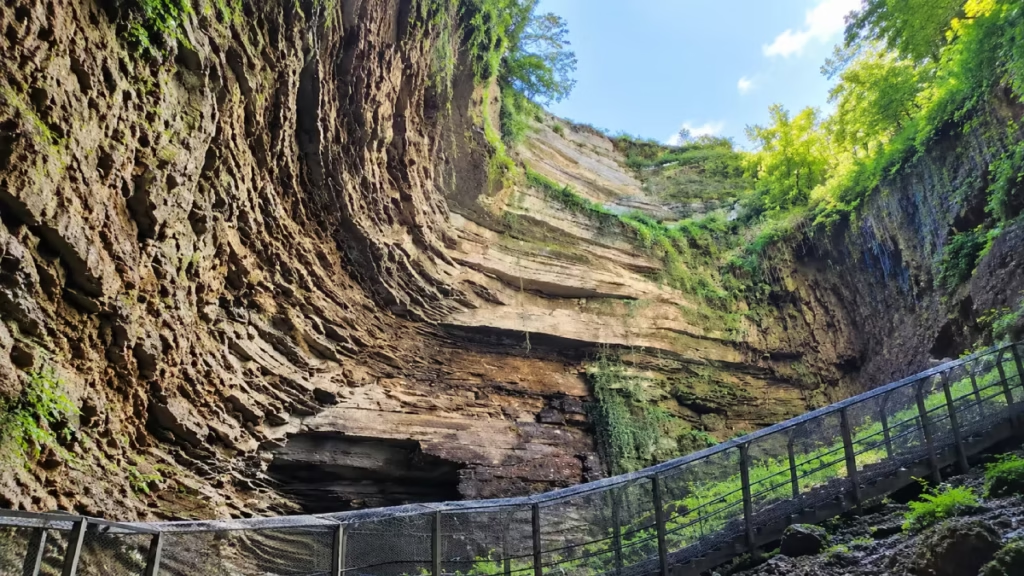
The most striking immediate feature of the site is the massive entrance sinkhole, or aven. The gouffre de Padirac measures approximately 35 meters in diameter and plunges straight down to a depth of 103 meters. This colossal opening was formed thousands of years ago when the roof of a gigantic underground cavern collapsed under its own weight, leaving a sheer-walled vertical cylinder open to the sky. Standing at the rim and looking down reveals a lush carpet of ivy, ferns, and moss clinging to the upper limestone walls, nourished by the microclimate created by the cool, humid air rising from the depths below.
Underground Rivers & Hidden Chambers
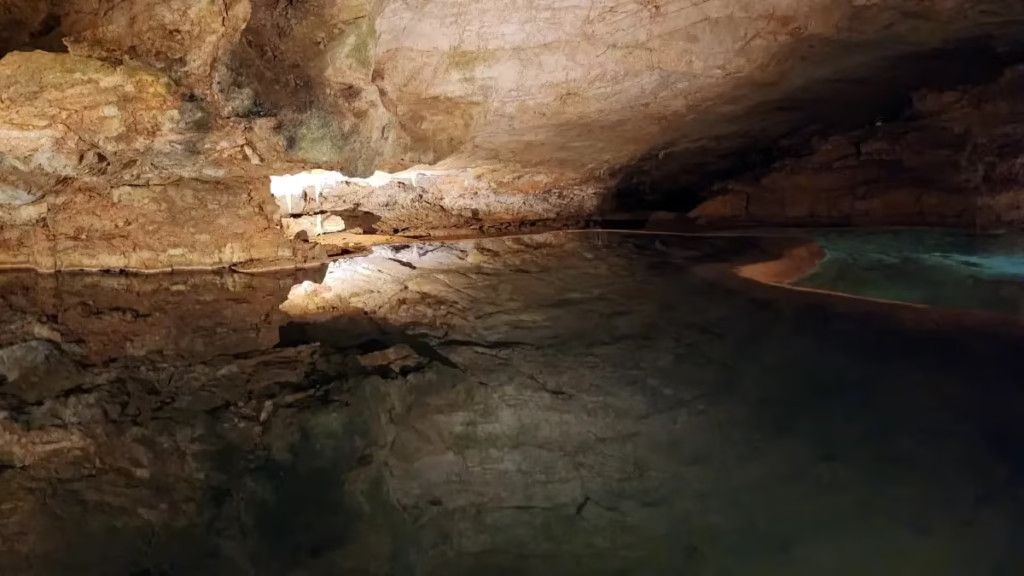
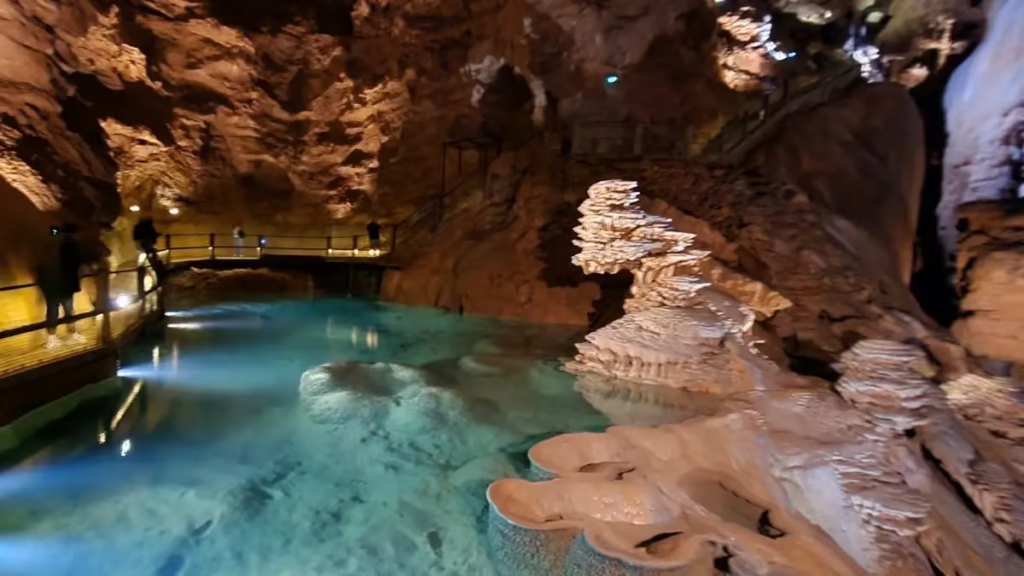
The true heart of the Gouffre de Padirac is its subterranean network, carved primarily by the Padirac underground river. This river system is part of one of the most extensive subterranean hydrological networks in France. The water originates from rainfall infiltration across the Causse de Gramat, feeding a river that flows through miles of illuminated galleries before eventually emerging at surface resurgence points, such as the exsurgence at the Font Estramar or neighboring valley springs.
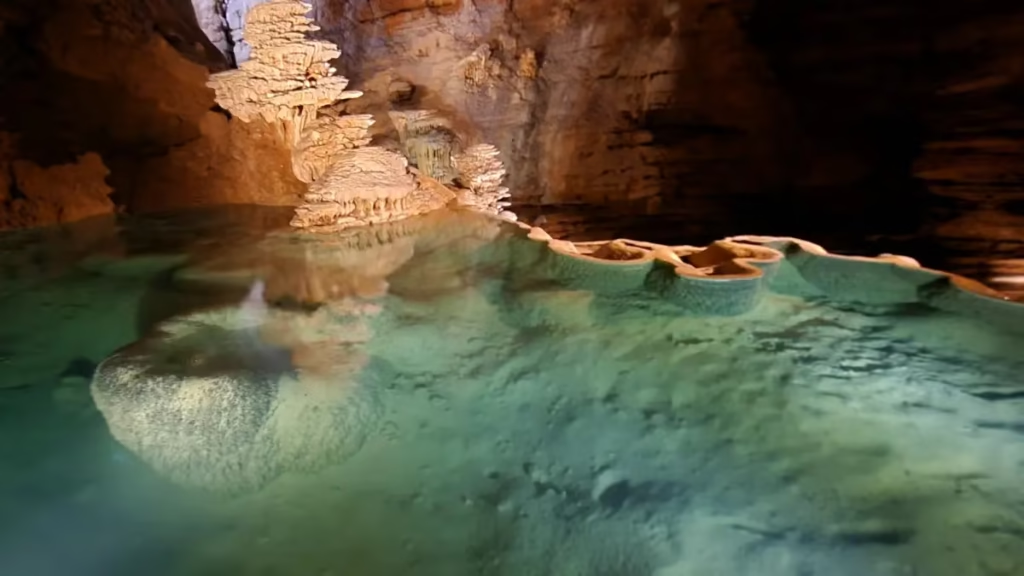
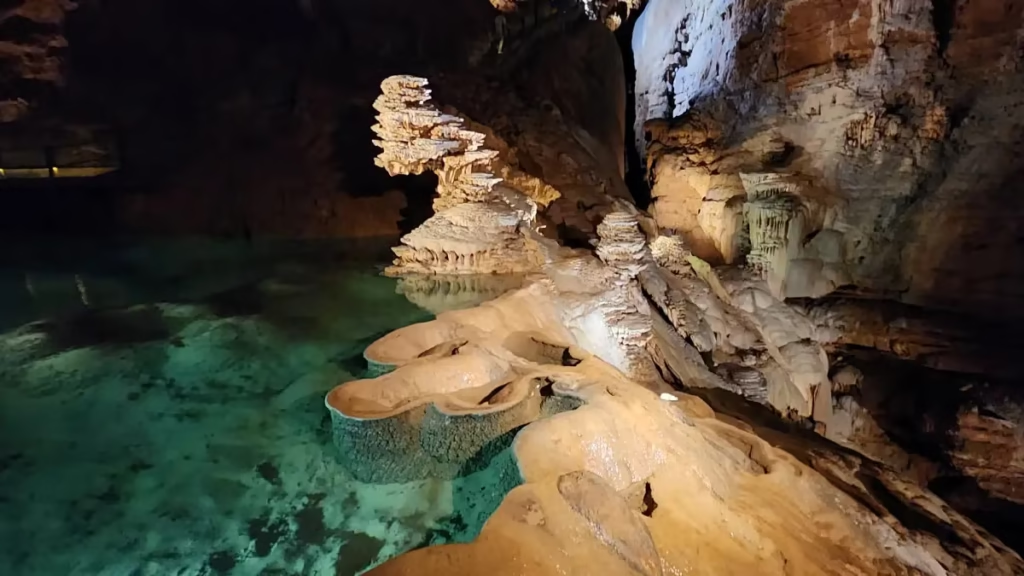
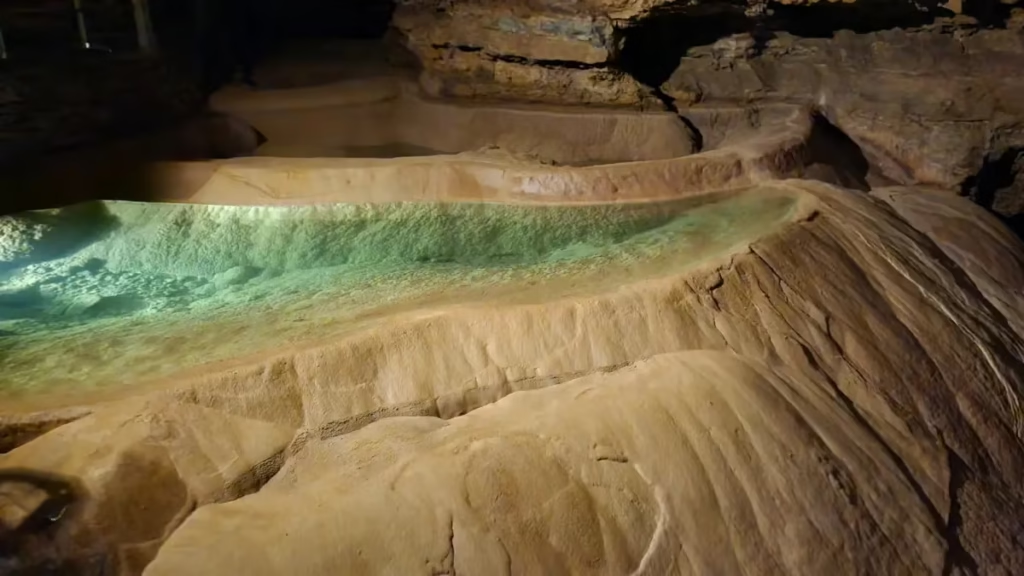
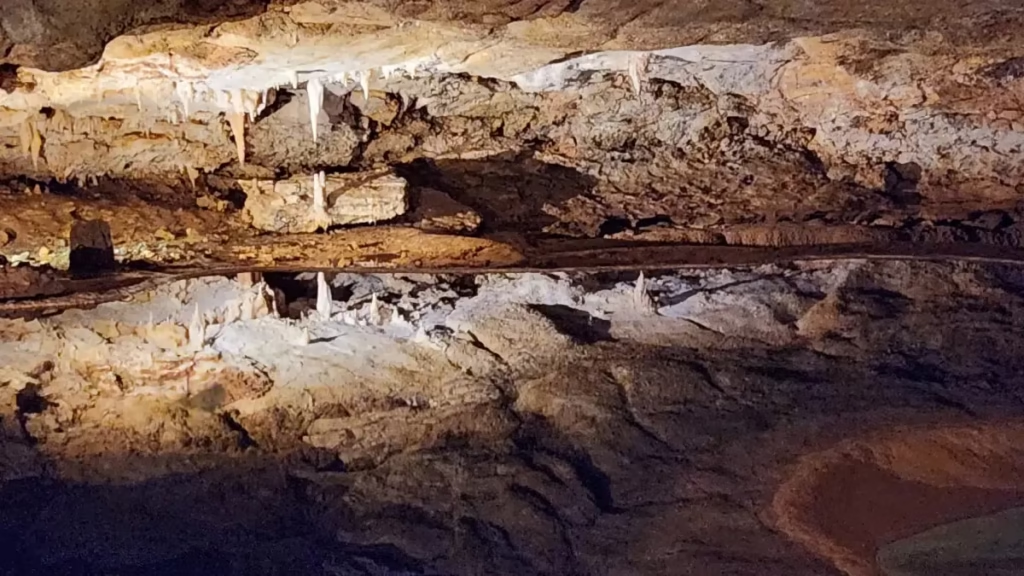
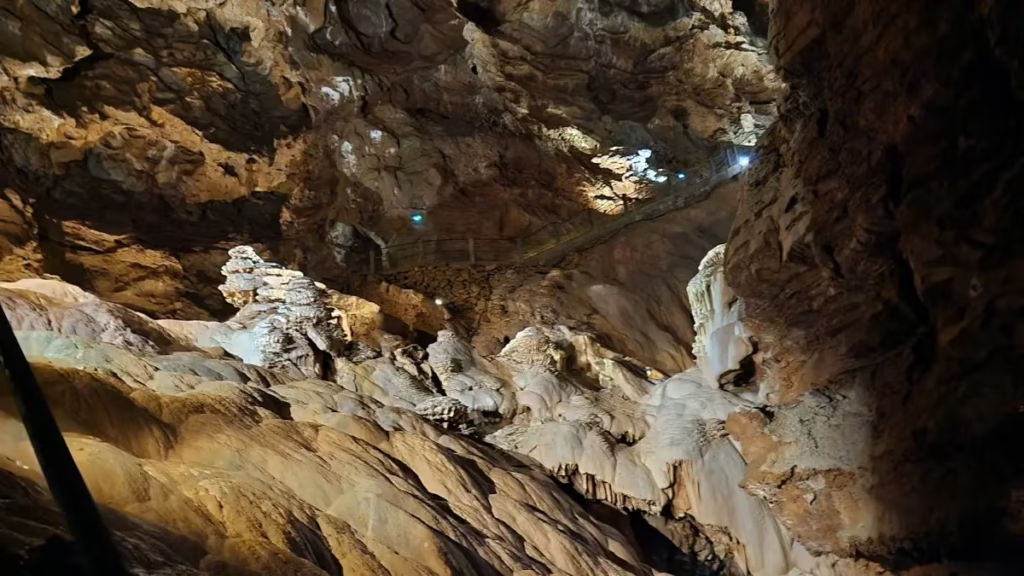
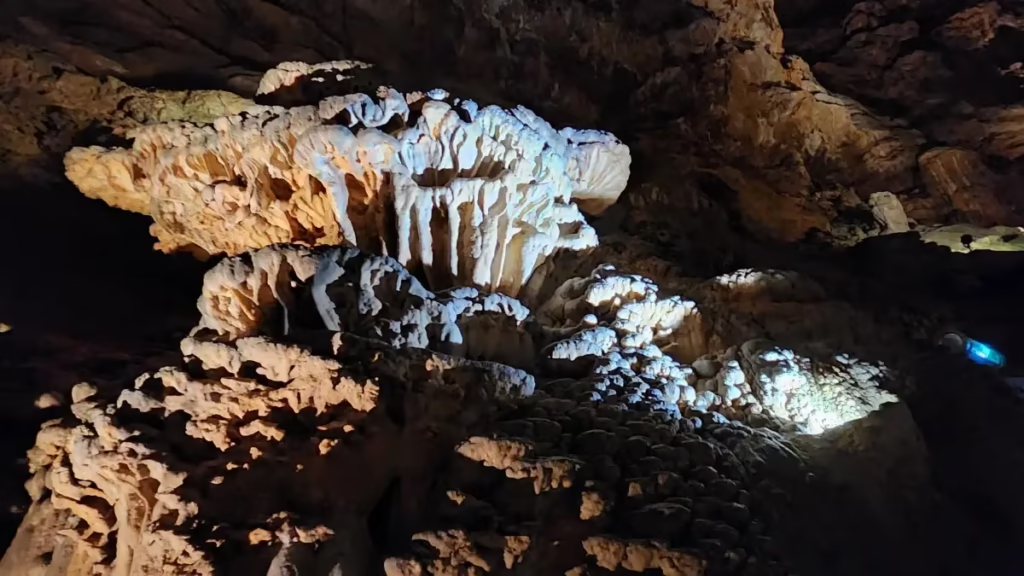
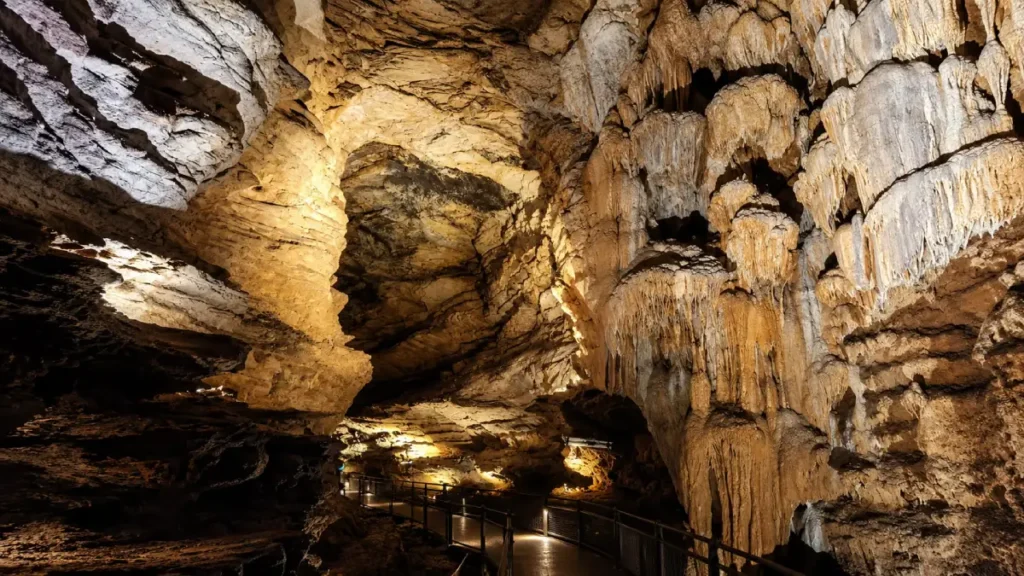
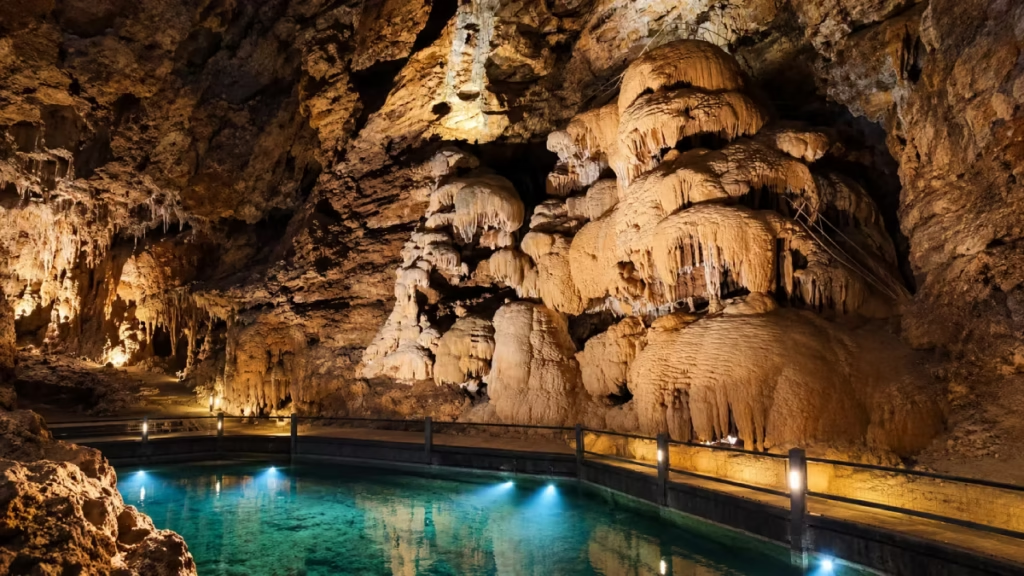
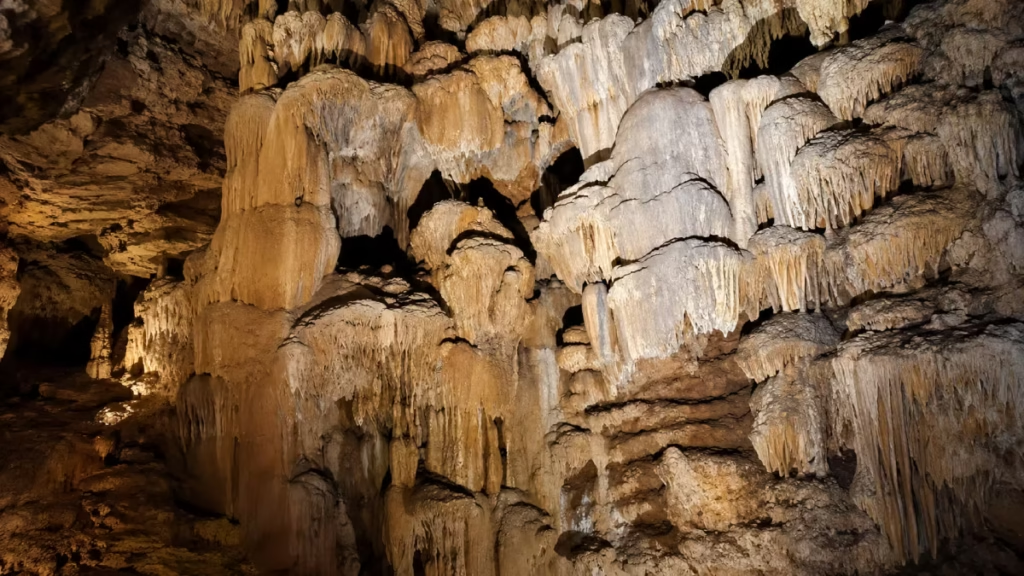
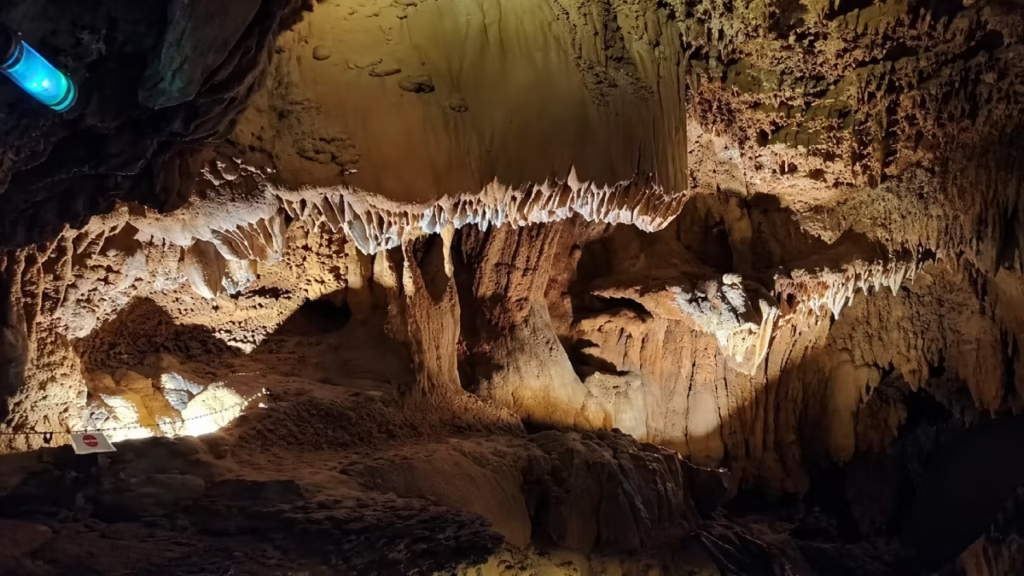
Over 130 kilometers of underground galleries and tunnels have been mapped by speleologists to date, making it a labyrinth of immense scientific importance. The Gouffre de Padirac geological formations within—ranging from delicate, translucent aragonite needles and eccentric stalactites to massive, centuries-old stalagmites like the famous “Grand Pendant” (a 60-meter-long column hanging from the ceiling)—are the result of calcium carbonate precipitation. As mineral-rich water drops slowly evaporate, calcite is deposited crystal by crystal, building these monumental sculptures over hundreds of millennia.
Historical Evolution: From Myth to Modern Exploration
Folklore and Medieval Legends
Long before scientific instruments measured its depths, the Gouffre de Padirac occupied a prominent place in local folklore and regional mythology. For centuries, rural inhabitants viewed the gaping, mist-shrouded abyss with a mixture of awe and superstition.
According to local legend, the chasm was forged by the Devil himself. The story recounts a confrontation between Saint Martin and Satan. Challenged by the saint, the Devil struck the limestone earth with his heel, creating a bottomless pit in an attempt to escape or trap his adversary. In earlier centuries, peasants whispered tales of dragons, evil spirits, and lost souls inhabiting the dark abyss, which kept human exploration at bay for generations.
The Dawn of Modern Speleology
The scientific exploration of the Gouffre de Padirac began on July 9, 1889, marking a milestone in the history of modern speleology. The expedition was led by Édouard-Alfred Martel, widely regarded as the founding father of modern speleology.
Equipped with rudimentary ropes, wooden ladders, and canvas boats, Martel and his team—including companions Louis Gaupillat and Gabriel Foulquier—descended the terrifying 103-meter vertical drop using a windlass and rope harness. Upon reaching the bottom, they launched a small boat onto the subterranean river and pushed into the unknown darkness.
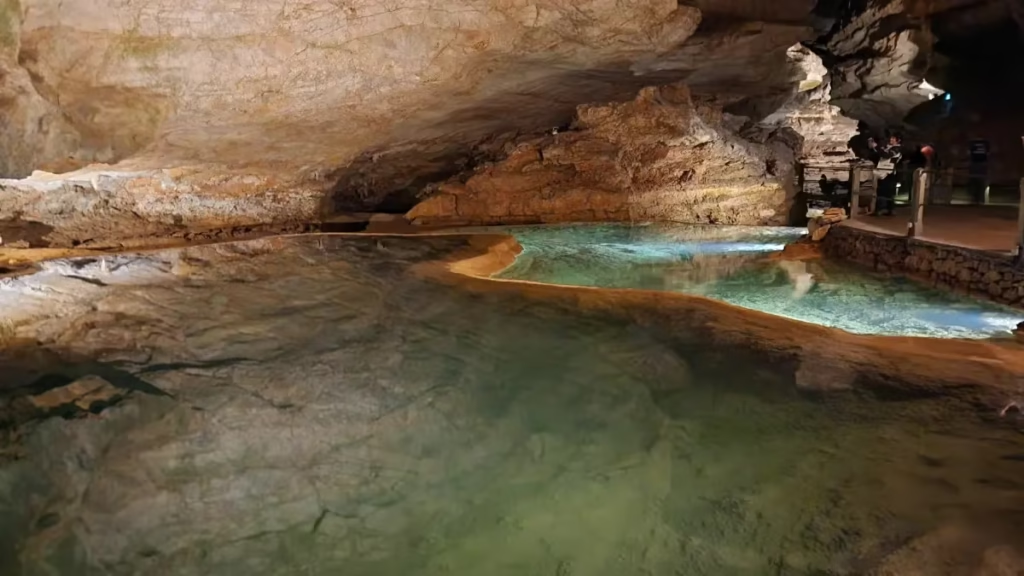
Martel’s initial explorations mapped the breathtaking subterranean chambers, crystal-clear lakes, and towering domes of the Gouffre de Padirac, proving that the chasm was not a bottomless gateway to hell, but rather an intricate, masterwork of natural hydrogeology. His meticulous documentation transformed public perception, shifting the chasm from a place of fear to a celebrated destination for scientific inquiry and public wonder.
Technical Information and Infrastructure
Operating a subterranean tourist attraction 100 meters underground while preserving its fragile geological ecosystem requires sophisticated engineering, rigorous safety protocols, and continuous environmental monitoring.
Descent and Access Systems
Visitors to the Gouffre de Padirac access the underground network via two primary methods:
- The Vertical Shafts: Modern visitors descend using a combination of two large-capacity high-speed elevators or an open-air metal staircase hugging the sheer rock face of the original sinkhole. The descent provides a dramatic transition from the sunlit surface down into the perpetual 13°C (55°F) twilight of the cavern.
- The Subterranean Fleet: Once at the bottom, visitors board flat-bottomed aluminum boats. Propelled manually by expert boatmen-guides using long poles pushed against the cavern floor and walls, tourists glide silently along the subterranean river through illuminated galleries such as the Lac de la Pluie (Rain Lake) and the Lac des Gants (Lake of the Gloves).
Key Subterranean Chambers and Landmarks
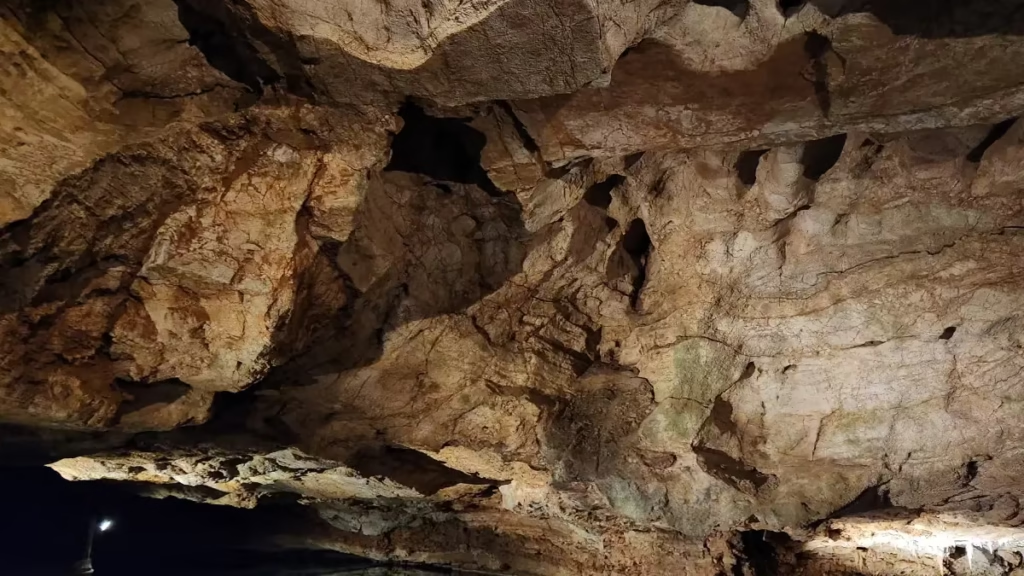
- The Salle du Grand Dôme: One of the most monumental underground chambers in Europe. The ceiling vaults upward to a staggering height of 94 meters (nearly 308 feet) above the riverbed. This colossal hall showcases massive limestone debris piles (eboulis) and monumental stalagmite formations illuminated to highlight the sheer scale of the cavity.
- The Pendant: A gigantic stalactite formation hanging directly over the boat channel, demonstrating the immense structural integrity and slow growth rate of crystal deposits in a humid, stable environment.
Conservation and Environmental Management
Managing a high-traffic subterranean site presents unique ecological challenges. Introducing artificial lighting, human body heat, and carbon dioxide can disrupt the delicate microclimate, encourage the growth of invasive algae (lamenaires or lampenflora), and impact delicate mineral formations.
To mitigate these impacts, site operators employ advanced technical measures:
- Lighting Technology: The traditional incandescent and high-heat lighting systems have been systematically replaced with specialized, low-temperature LED lighting arrays. These fixtures minimize heat emission and drastically reduce the growth of lampenflora on ancient rock formations.
- Climate and Humidity Monitoring: Specialized sensors continuously track temperature, barometric pressure, carbon dioxide levels, and water flow rates along the subterranean river to ensure visitor numbers remain within sustainable carrying capacities.
- Hydrological Protection: Strict environmental regulations govern the surrounding agricultural plateau of the Causse de Gramat. Surface runoff management prevents fertilizers and pollutants from infiltrating the karst network, safeguarding the pristine clarity of the subterranean waters that sustain unique endemic aquatic species, such as blind cave crustaceans (Niphargus).
Opening Season and Schedule
Annual Operating Window of the Gouffre de Padirac:
The site is open seasonally from late March through early November (typically closing for the winter period from November to March).
Daily Hours:
Usually opens at **9:30 AM**, with closing times and last-admission slots varying by season (typically last entry is around 4:15 PM in low season or later during peak summer months).
Duration of Visit:
Approximately 1 hour and 30 minutes to 2 hours for the 2.2 km route (which includes a 500-meter underground boat ride).
Temperature Note:
The underground temperature of the Gouffre de Padirac remains a constant **13°C (55°F)** year-round, so a warm jacket or sweater is recommended.
Entry Fees (2026 Rates)
Prices vary depending on whether you visit during the low or high season:
Adults (13+):** €20 (Low Season) / €24 (High Season)
Students / Over 12:** €18.50 (Low Season) / €22 (High Season)
Children (Aged 4 to 12):** €14 (Low Season) / €18 (High Season)
Children Under 4:** Free
Note: Online booking in advance is strongly recommended (and sometimes required on peak days) to guarantee entry, as visitor numbers are capped. On-site parking is free.
How to Get There from Sarlat-la-Canéda
By Car (Recommended):
The drive takes approximately 1 hour and 10 minutes (about 55 km) heading east. The most direct scenic route goes via the D703 across the Dordogne Valley, passing near Souillac, and then taking local roads toward Padirac.
By Public Transport: There is no direct, easy public transit route from Sarlat. Taking regional buses requires multiple transfers (e.g., bus from Sarlat to Souillac station, then a connecting bus toward Padirac) which can take over 3 hours. Renting a car or joining a day excursion is heavily favored.
From Cahors (Lot)
By Car (Recommended):
The drive takes approximately 1 hour (about 70-75 km). From Cahors, you head north up the A20 motorway, exit toward Gramat/Rocamadour, and follow the local departmental roads (such as the D820 and D807) directly to the site.
By Public Transport: Public transit from Cahors is similarly sparse for direct tourism. While regional trains run toward nearby stations like Gramat or Rocamadour-Padirac, local seasonal shuttle buses (like liO line 876/877) only operate limited schedules during peak summer months or weekends. Driving or taking a taxi from a nearby regional rail hub is much more practical.
Conclusion
The Gouffre de Padirac stands as a testament to the profound forces of nature and the pioneering spirit of human exploration. From its origins as a legendary abyss feared by medieval villagers to its status as a masterpiece of speleological discovery and modern engineering, the chasm continues to captivate all who journey into its cool, echoing depths. By balancing public access with rigorous scientific preservation, this subterranean realm remains protected, ensuring that future generations can continue to marvel at the silent, majestic architecture carved by water through the heart of France.
Discover more from planetgateaway.com
Subscribe to get the latest posts sent to your email.
One Response