
Table of Contents
ToggleTahiti: The Queen of the Pacific
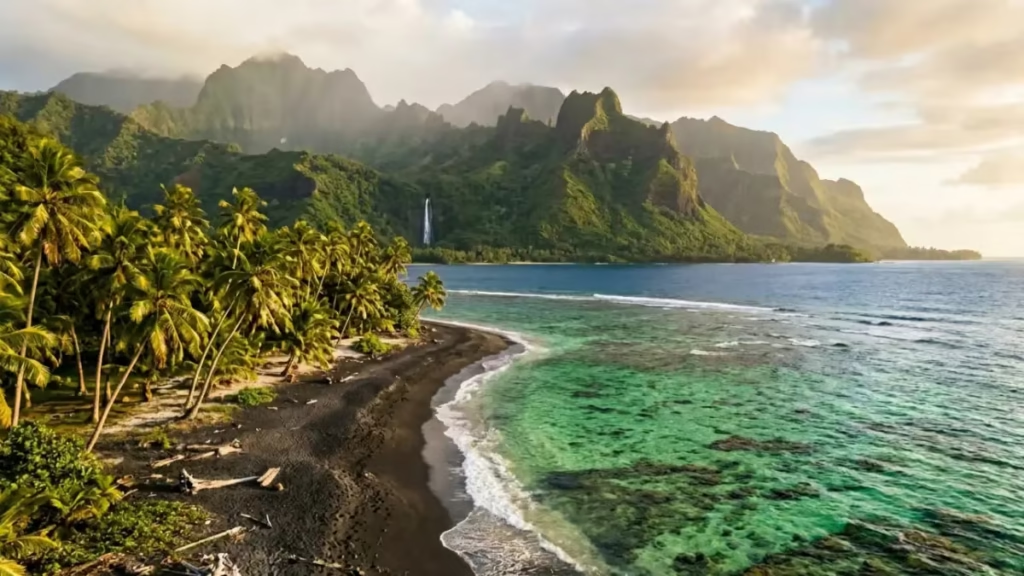
Tahiti, the “Queen of the Pacific,” is the largest and most famous island in French Polynesia. Its history is a fascinating blend of ancient Polynesian navigation, royal dynasties (the Pomare Line), and the arrival of European explorers like Wallis, Cook, and Bougainville. Geographically, it is divided into Tahiti Nui (the larger northwestern part) and Tahiti Iti (the smaller southeastern peninsula), connected by the Isthmus of Taravao.
Here is the history, geography, and logistical guide for the island’s most iconic sites, including several must-see additions.
Tahiti Essentials
- Geography:Tahiti is the largest island in French Polynesia, shaped like a figure-eight (Tahiti Nui and Tahiti Iti).
- Best Time:June to August offers the most sunshine and the famous Heiva I Tahiti festival in July.
- Transportation:Renting a car is the best way to see the island. Within Papeete, you can use the “Le Truck” (local bus) or taxis.
Budget & Planning
- Accommodations:Average $150–$250 USD for a decent hotel or high-end Airbnb.
- Daily Expenses:Expect to spend $80–$120 USD on food and local transport.
- Time Needed:Spend 3 to 5 days to fully appreciate the island before hopping to Moorea or Bora Bora.
Tahiti Transportation (The Hub)
Tahiti is the only island with a semi-reliable public bus system, making it the easiest for budget travelers.
- Public Bus (RTCT):
Tahiti is the only island with a semi-reliable public bus system, making it the easiest for budget travelers
The public transportation system in Papeete is relatively efficient.
The trip costs XFP 200 if you pay the driver directly, or XFP 150 if bought through the app. Keep in mind that each time you change buses, you will have to pay a new fare. However, Papeete is a small city, and almost everything is within walking distance.
Large, modern buses run frequently between Papeete and the western/eastern suburbs. Note that service drops off significantly after 6:00 PM and on weekends.
- Car Rental: Highly recommended if you want to do a “Circle Island” tour to see the waterfalls and blowholes on the east coast.
- Taxis: Plentiful in Papeete but expensive. Rates are regulated but increase by 50% at night (8:00 PM – 6:00 AM).
- Walking: The Papeete waterfront and market area are very walkable.
Arrival in Tahiti & Airport Logistics
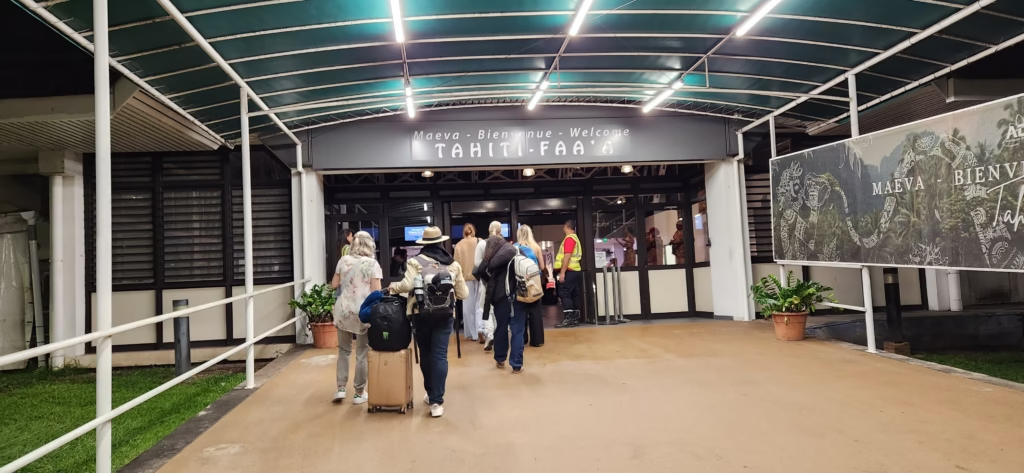
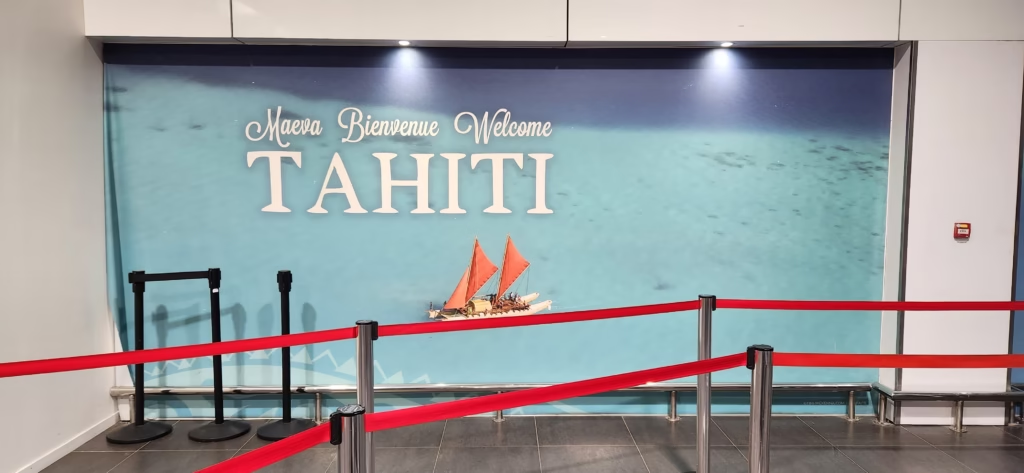
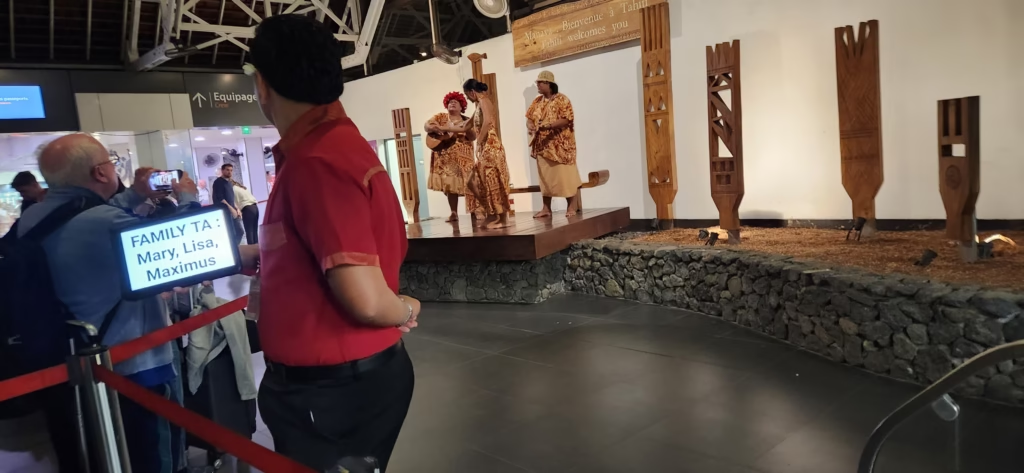
After a 7.5-hour flight from Los Angeles with Air Tahiti Nui—which is a very good airline—we arrived at Papeete Faa’a Airport around 4:30 in the morning. It was still dark outside, and as soon as we exited the plane, we could immediately feel the tropical humidity. Upon entering the airport terminal, we were warmly welcomed by a traditional Tahitian musical group and local dancers.
Passing through customs was relatively fast, and even from the customs agents, you can immediately start to feel the genuine kindness of the Polynesian people. The airport itself is quite small but highly efficient.
To get to downtown Papeete, the capital city, you have two main options:
- The Taxi: This is relatively expensive, costing between US$20 to US$25 for a journey of only 6 kilometers.
- The Shuttle Bus: This costs XFP 200 (around US$2) if you buy your ticket directly from the driver, or XFP 150 (around US$50) if you purchase it online using the local Tere Tahiti mobile app. This app is highly recommended for tracking bus routes and schedules, though you should be aware that it is not always perfectly updated.
To catch the shuttle from the airport, exit the terminal, cross the parking lot, walk up the stairs, and cross the street. Make sure you take the bus heading north, and don’t hesitate to ask the driver to alert you when you reach your specific stop.
Exploring Around Tahiti
To drive completely around Tahiti, one day is sufficient—or two days if you want to make extra stops at Tahiti Iti. Tahiti Iti is the southern peninsula of Tahiti island, where you can find the world-famous Teahupo’o wave from the 2024 Olympic Games.
When you travel around the island, try your best to avoid the heavy rush-hour traffic. If you are heading south, the peak traffic hours are between 3:00 PM and 4:00 PM, while the rush hour heading north occurs between 5:00 PM and 6:00 PM.
What to Do in Papeete & Beyond
Top Attractions:
Papeete Market :
The heart of the city for pearls, vanilla, and crafts.
- History: For over 170 years, this has been the social and economic hub of Tahiti. The current structure, built in 1987, stands on the site where locals have traded since the 19th century. It survived several fires and remains the most authentic place to see the Tahitian “Art de Vivre.”
- Geography: Located in the center of the capital city, just blocks from the waterfront. It is a two-story hall organized by product: fish and produce on the ground floor, and handicrafts (monoi oil, pareos, and pearls) upstairs.
- How to Get There: Easily walkable from any central Papeete hotel or the cruise ship terminal.
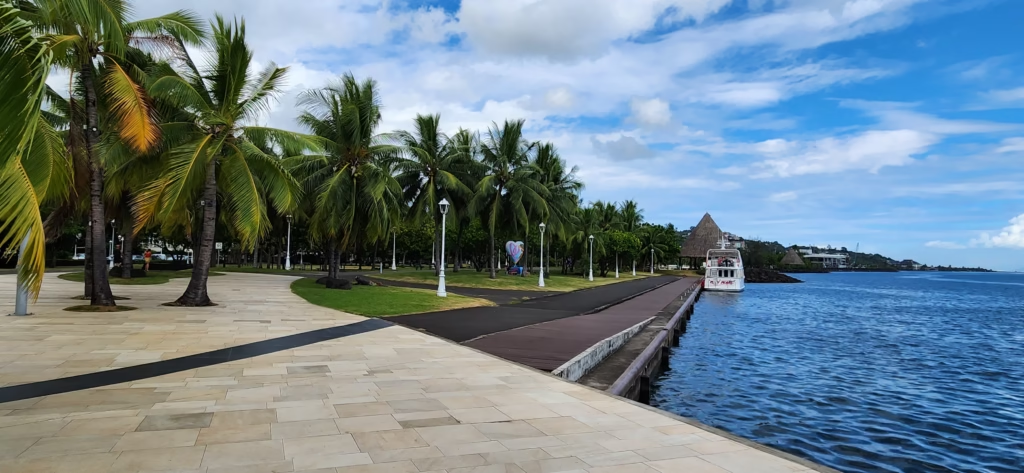
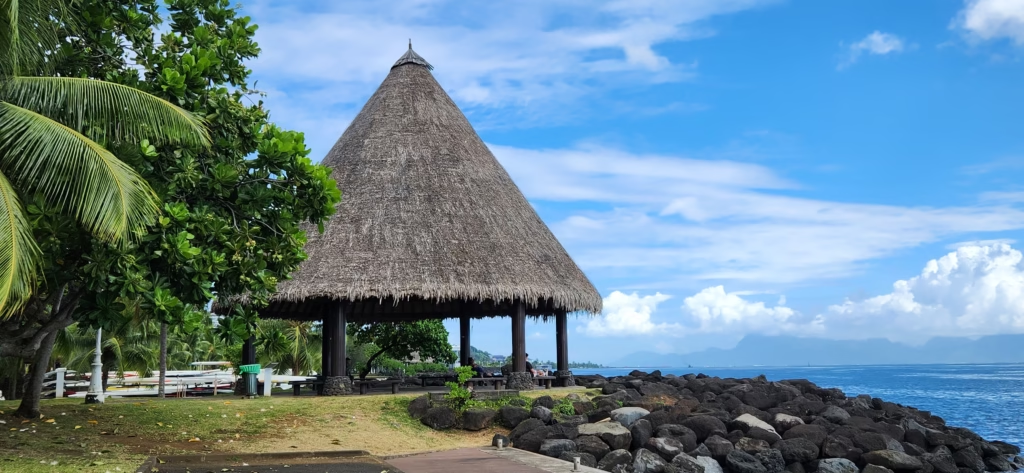
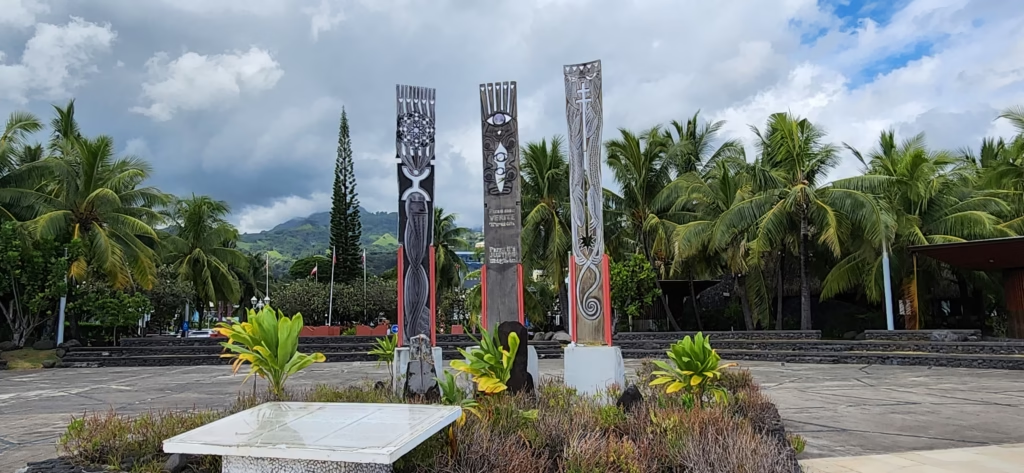
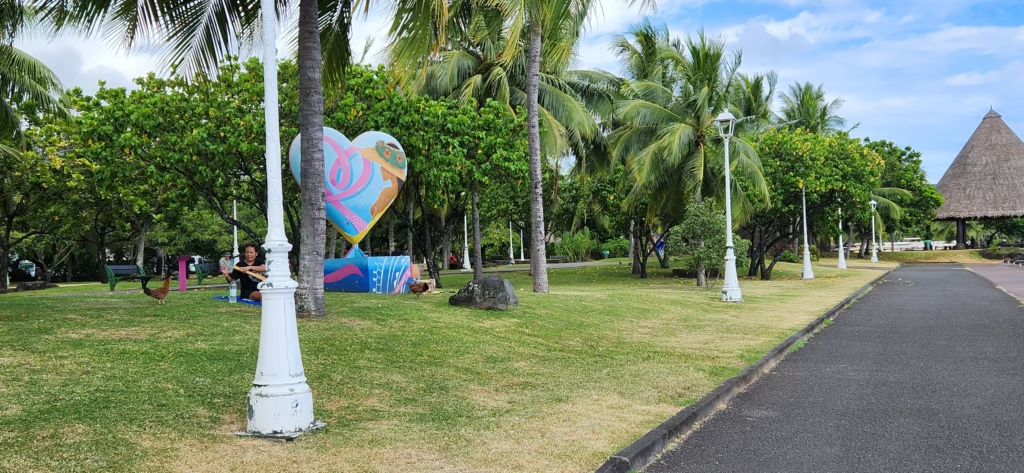
Tahiti Memorial Park (Paofai Gardens)
- History: Built on reclaimed land, this modern park is the lungs of Papeete. It serves as a tribute to the island’s maritime history and is where locals practice Va’a (outrigger canoeing).
- Geography: A long, coastal park stretching along the Papeete harbor, filled with palm trees, fountains, and walking paths.
- How to Get There: Located at the western edge of Papeete’s waterfront; a short walk from the market.
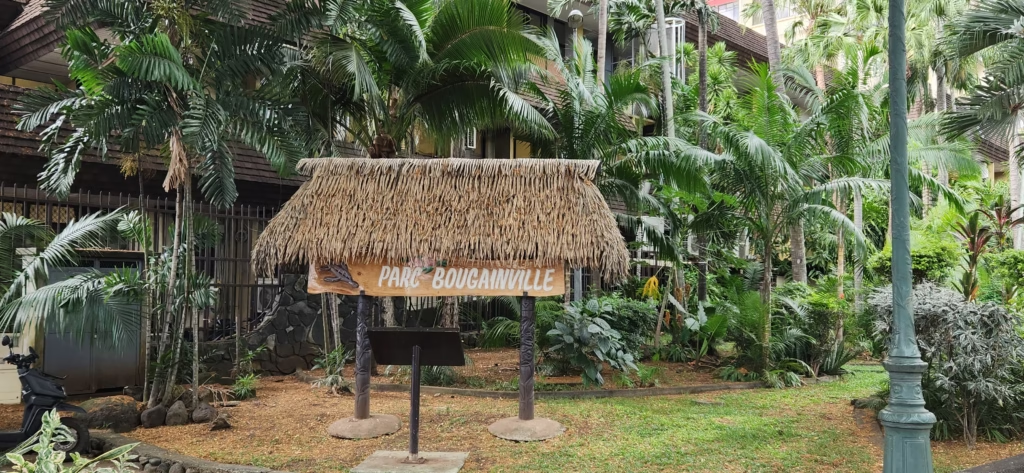
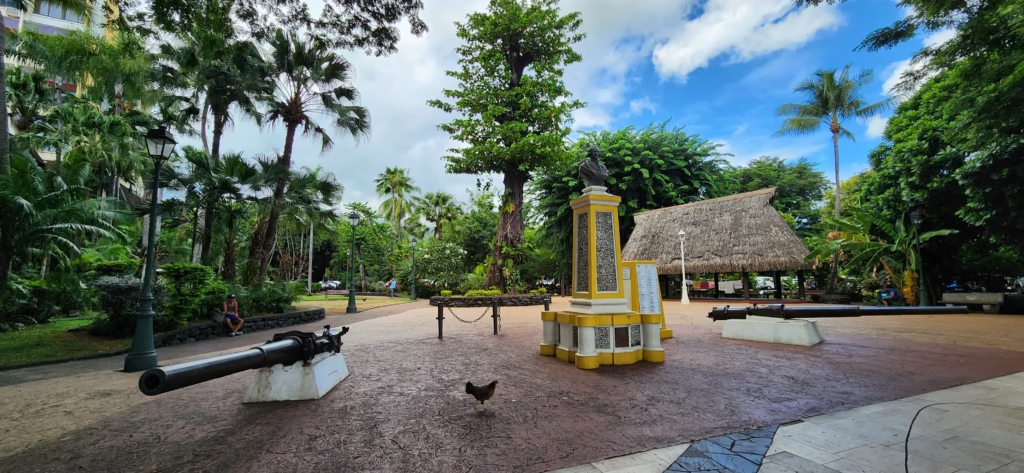
Bougainville Park:
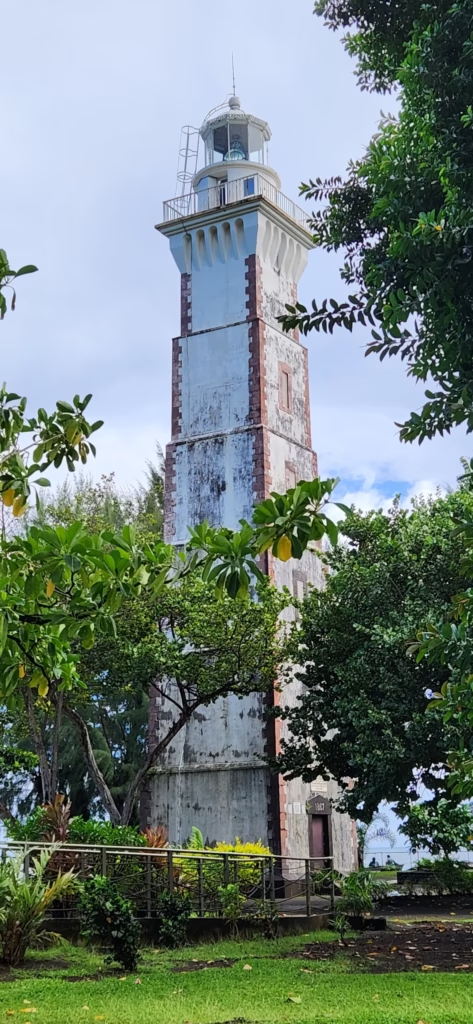
Point Venus:
Historical lighthouse and beautiful black sand beach.
- History: This is one of the most significant historical sites in the Pacific. It was here in 1769 that Captain James Cook observed the Transit of Venus to calculate the distance between the Earth and the Sun. The lighthouse was designed by Thomas Stevenson (father of Robert Louis Stevenson) and built in 1867.
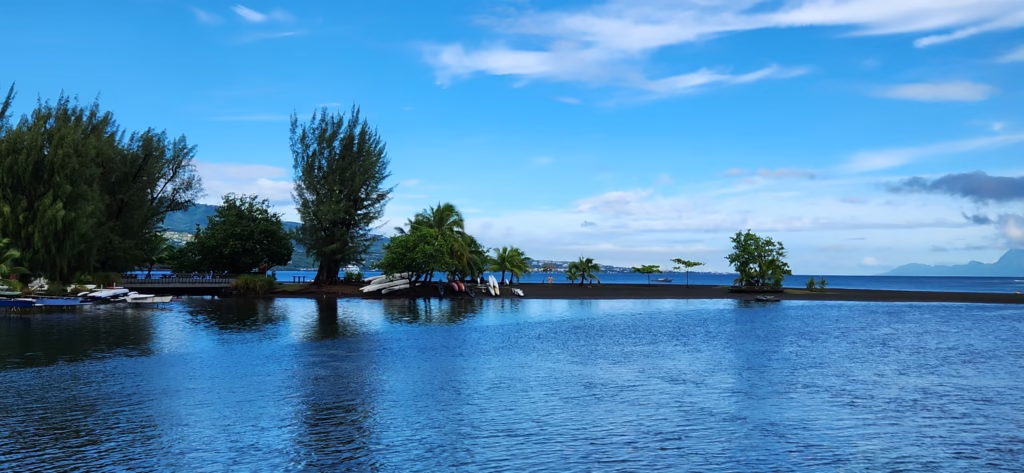
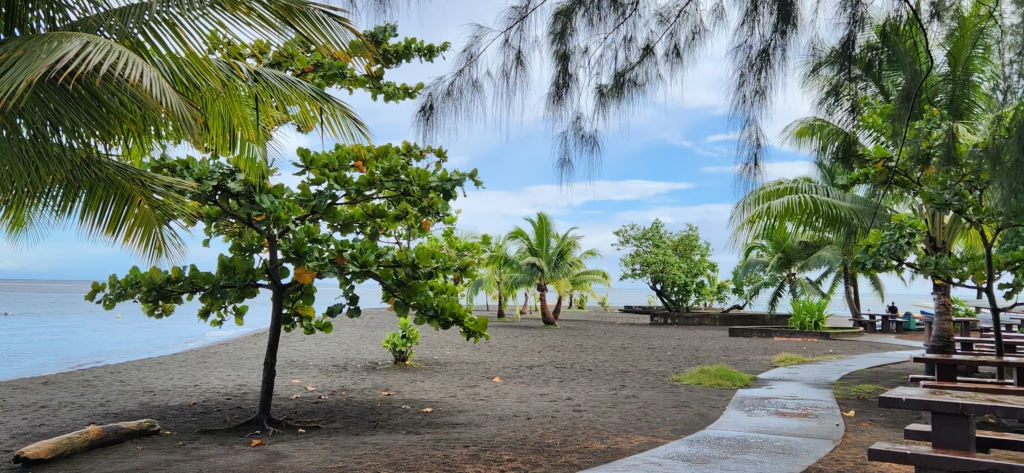
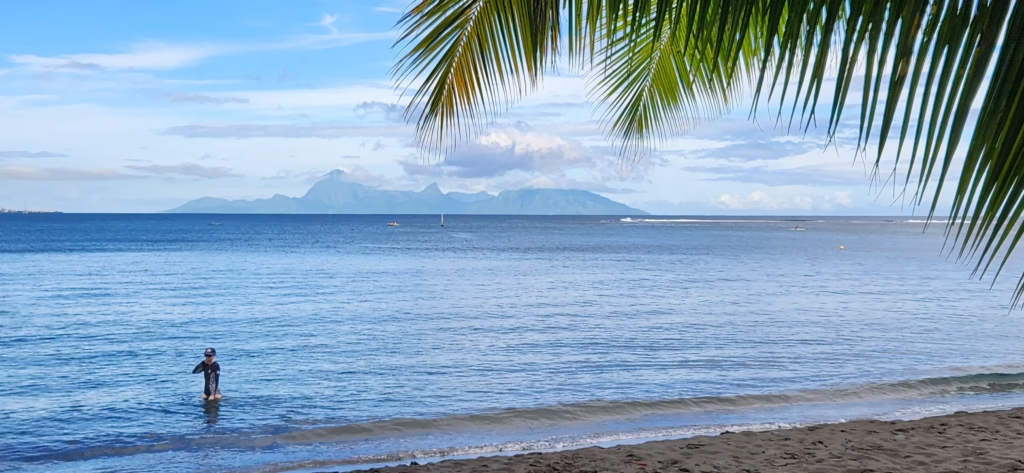
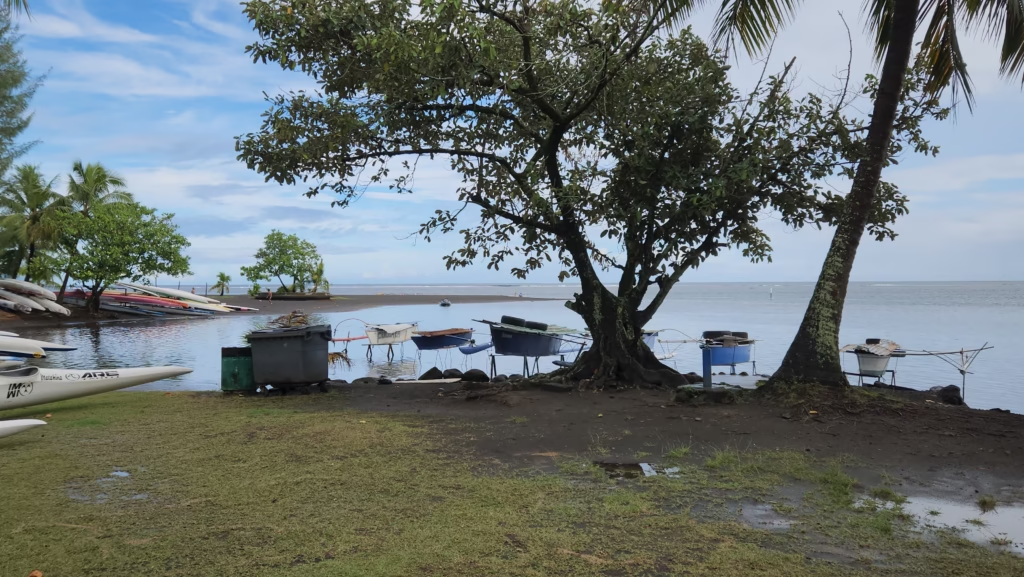
- Geography: A low-lying peninsula on the north coast featuring a rare, shimmering black volcanic sand beach and calm waters protected by a reef.
- How to Get There:
- Located in Mahina, about 15–20 minutes north of Papeete by car or the local “Le Truck” bus.
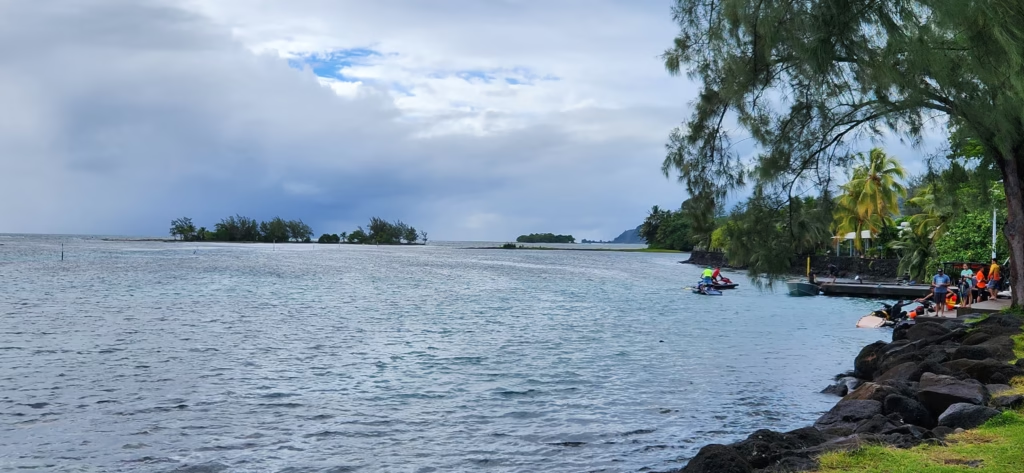
The Point Venus is located in the northern part of the island and is very easy to reach by car. If you choose to use public transportation instead, take the bus from the main bus station in Papeete. The trip lasts around 20 minutes, but the buses only run every 3 hours. The driver can drop you off at Mahina Village, which is about a 20 to 30-minute walk to the point, or you can ask the driver nicely if he can drop you directly at the Point Venus parking lot. If he drops you off on the main road, it is a 10 to 15-minute walk (about 1 kilometer).
At Point Venus, you will find a stunning black sand beach, which is typical for most beaches on Tahiti island, with the notable exception of the white sands at PK 18 Beach. If you are relying on public transportation, always double-check the return schedule with your driver before setting off.
Faarumai Waterfalls:
Stunning cascades hidden in the lush jungle.
- History: According to local legend, these three falls represent a princess and two guardians who were transformed into water to escape a forbidden love. They have been a spiritual site for Tahitians for centuries.
- Geography: Tucked into a deep, steep-walled valley in Tiarei. The primary fall, Vaimahuta, is a spectacular vertical drop surrounded by prehistoric-looking giant ferns and basalt cliffs.
- How to Get There: About 45 minutes from Papeete. Follow the coastal road to Tiarei; the turn-off is well-marked and leads to a parking area near the trailhead.
- Unfortunately, 2 waterfalls was temporarily closed.
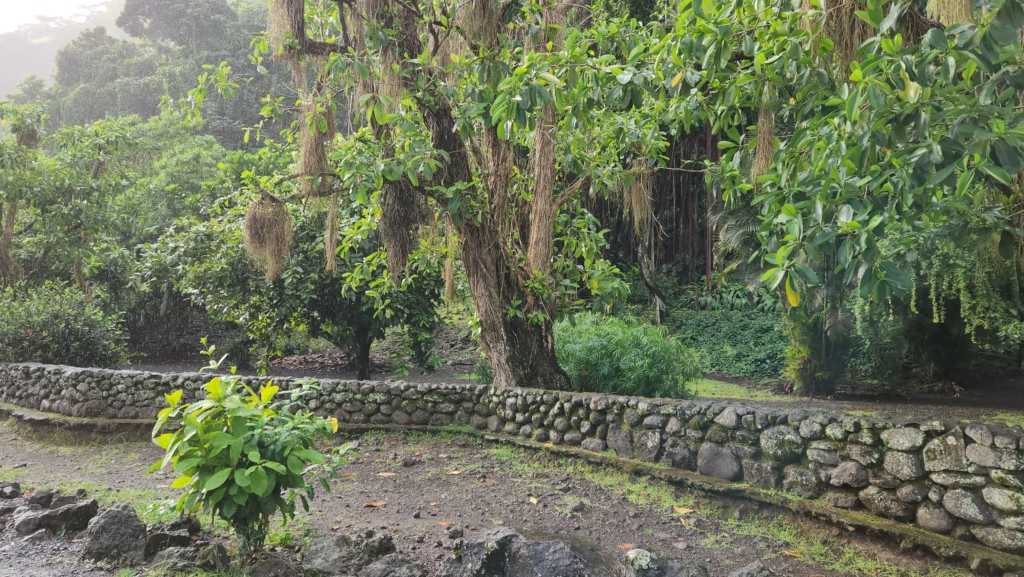
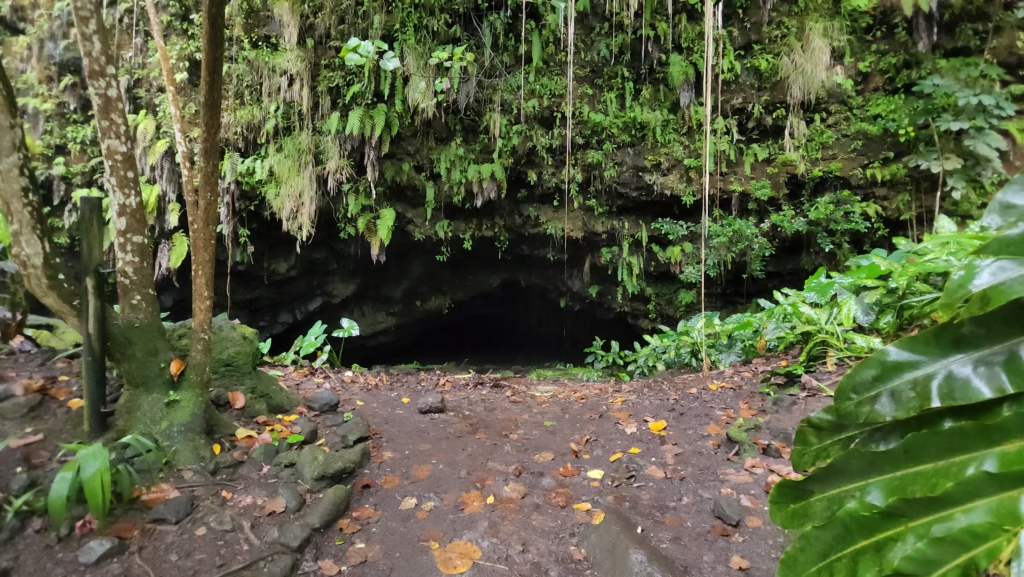
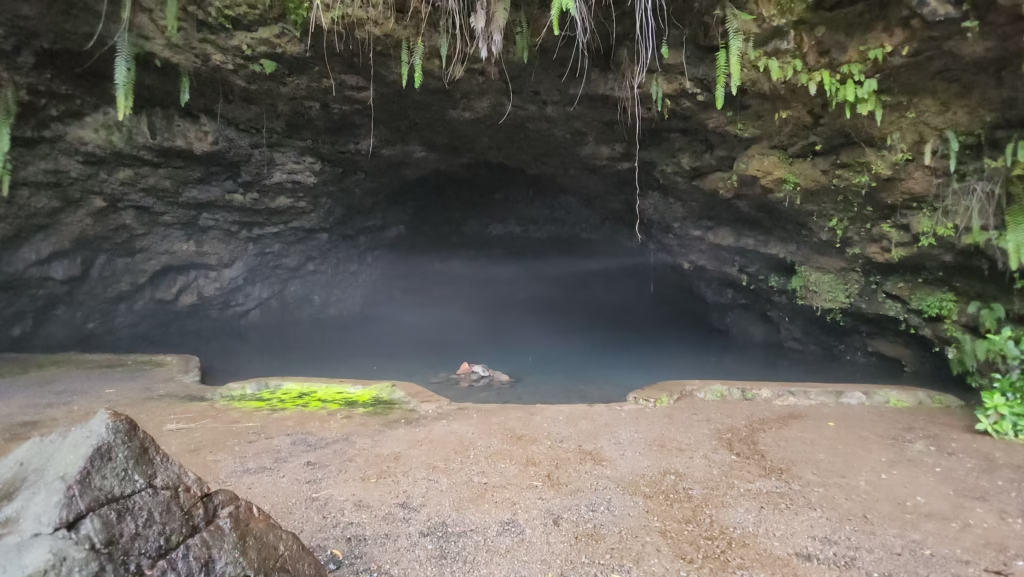
Maras Caves:
The Arahoho Blowhole:
A natural coastal wonder.
- History: Created over thousands of years by the relentless Pacific surf, this natural phenomenon occurs where the sea has eroded a tunnel through a coastal lava tube.
- Geography: Situated on the rugged coastline of Tahiti Nui. When large swells hit the coast, the air and water are compressed through the tube, resulting in a powerful geyser-like blast and a deep “roaring” sound.
- How to Get There: Located right on the main belt road in Tiarei, very close to the Faarumai Waterfalls. There is a designated viewing platform.
- the Arahoho Blowhole is located on the east side of the island. Unfortunately, it was temporarily closed for renovations during my visit, but there is a small accompanying beach where you can swim and watch local surfers practicing. There is also a small parking lot available on-site.
The Water Gardens of Vaipahi (Jardins d’Eau de Vaipahi)
History:
This site was historically sacred to the Teva clan. The waters were believed to be the “Path of Souls,” where the spirits of the deceased would be purified before ascending to the afterlife.
Geography: A lush botanical park on the south coast featuring archaeological remains, exotic tropical flowers, and several natural springs and ponds fed by a waterfall.
How to Get There: Located in Mataiea (south Tahiti Nui). It is a perfect stop during a full-island circle tour.
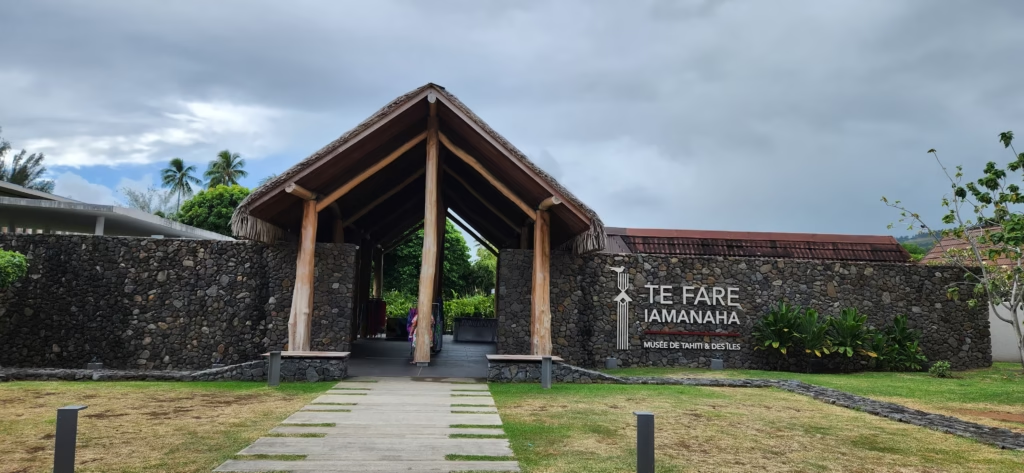
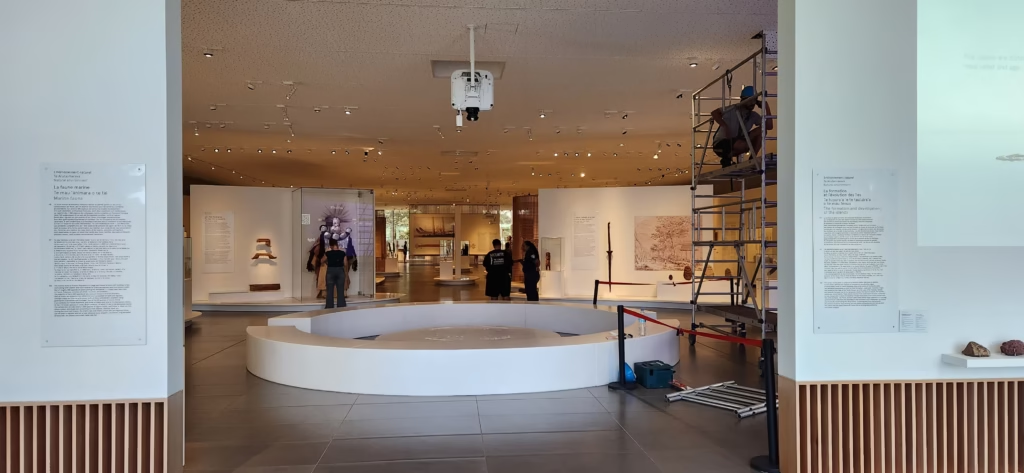
Museum of Tahiti and the Islands (Musée de Tahiti et des Îles)
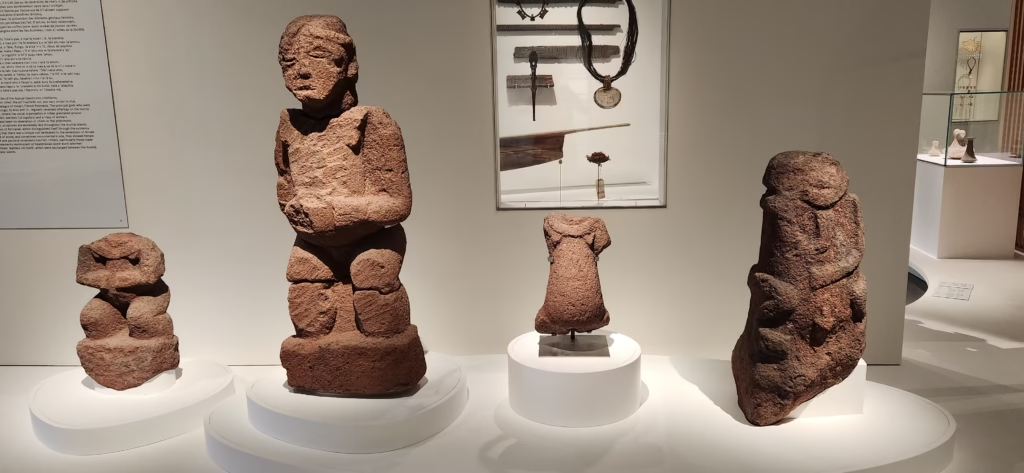
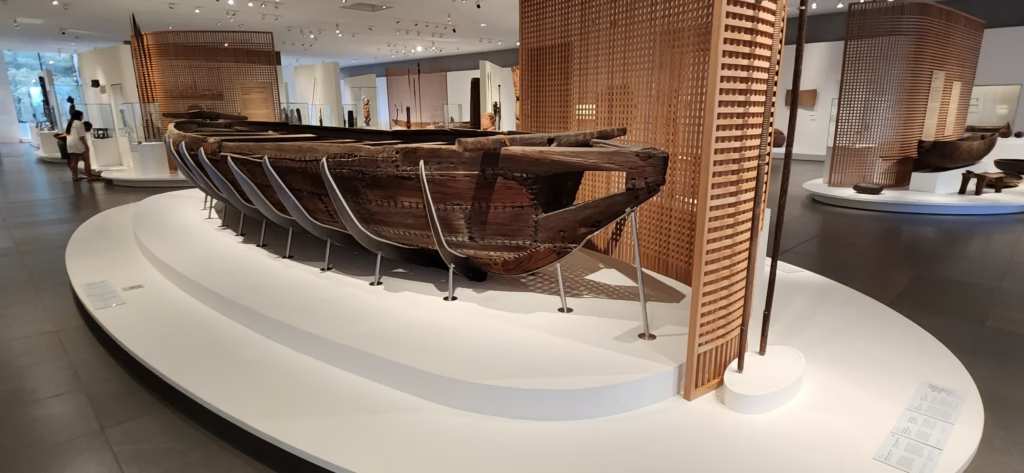
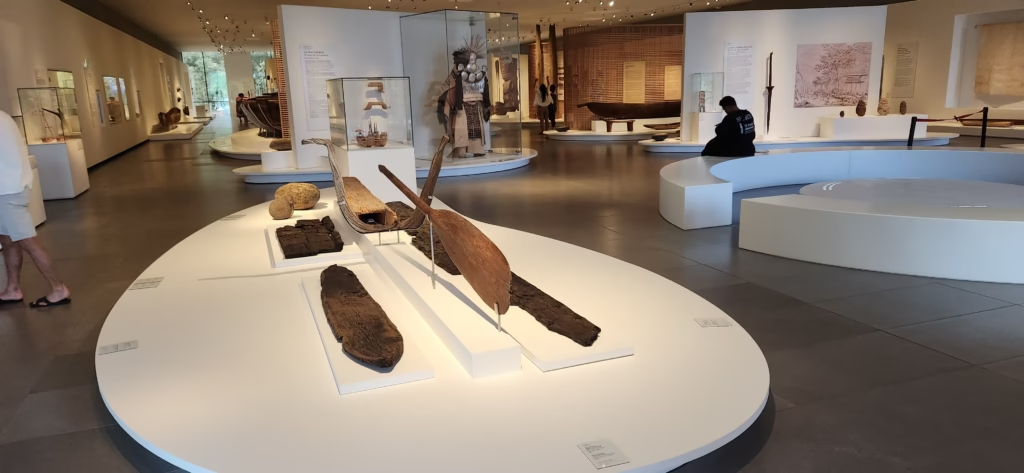
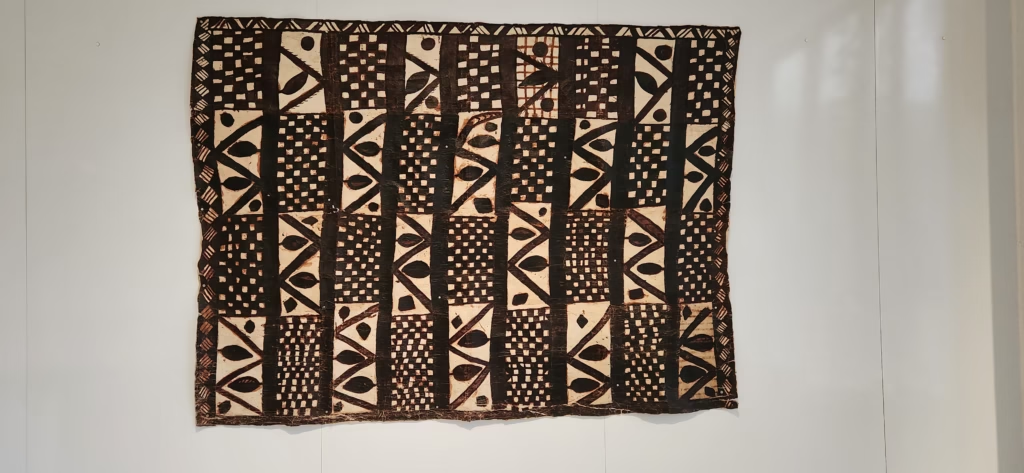
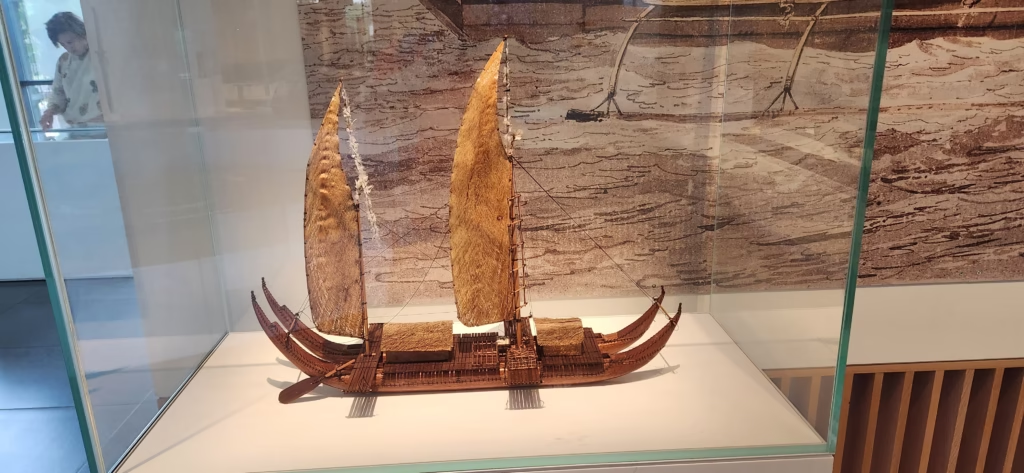
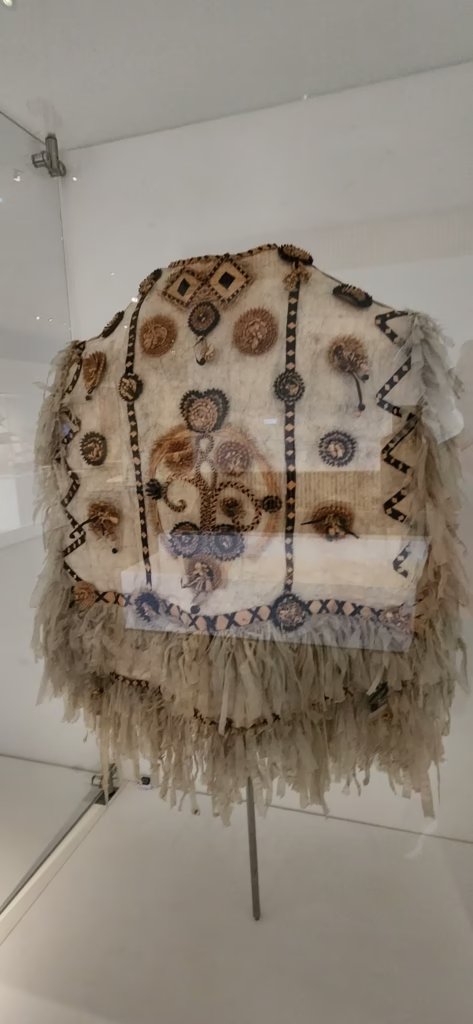
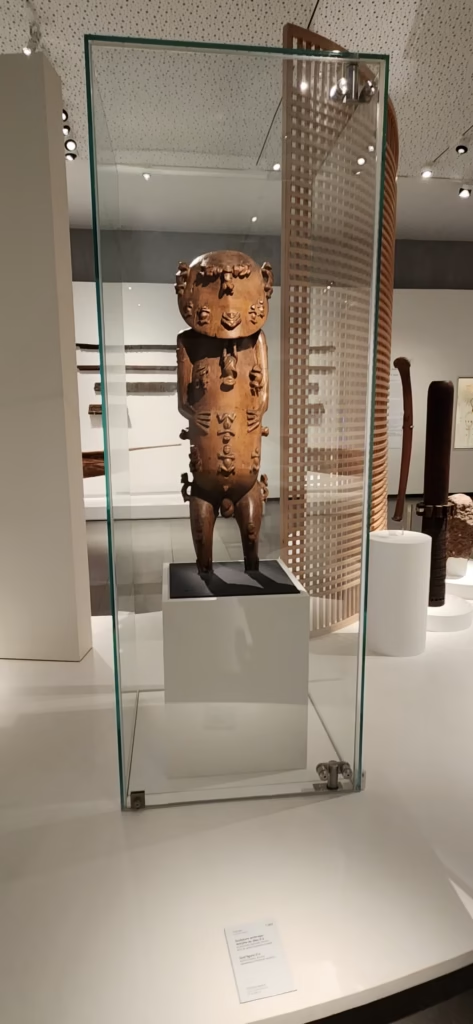
- History: Considered one of the best museums in the South Pacific, it was founded in 1974 to safeguard Polynesian heritage. It houses rare Tiki statues, ancient navigational tools, and traditional costumes.
- Geography: Located on the tip of Puna’auia, overlooking a world-class surf break. The grounds themselves are a botanical garden of “useful plants” brought by the original settlers.
- How to Get There: A 15-minute drive south of Papeete. Accessible by car or public transport.
- For those who are interested in the history of the Polynesian people, the Tahiti Museum is an absolute must-visit. The entrance fee is XFP 1,000 (around US$10). It is a thoroughly fascinating museum, and you should expect to spend about one hour exploring it. Just a few kilometers away from the museum, you will find the beautiful PK 18 Beach. Another interesting stop is the Mara’a Caves, which are located near kilometer marker PK 28.
The Teahupo’o Wave (Tahiti Iti)
- History: Originally a legendary site for Tahitian chiefs to prove their bravery, it is now the world’s most famous “heavy” surf break and hosted the 2024 Olympic surfing events.
- Geography: Located at the “end of the road” on Tahiti Iti. The wave breaks over an extremely shallow coral reef, creating a thick, tubular “wall of water” that is unique in the world.
- How to Get There: Drive to the end of the road in Teahupo’o. To see the wave properly, you must hire a local boat taxi to take you out to the channel (about a 10-minute boat ride).
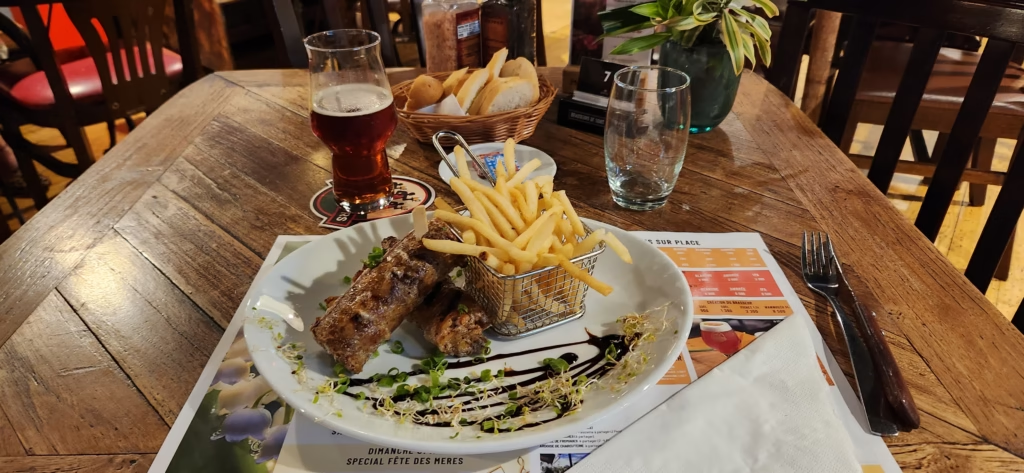
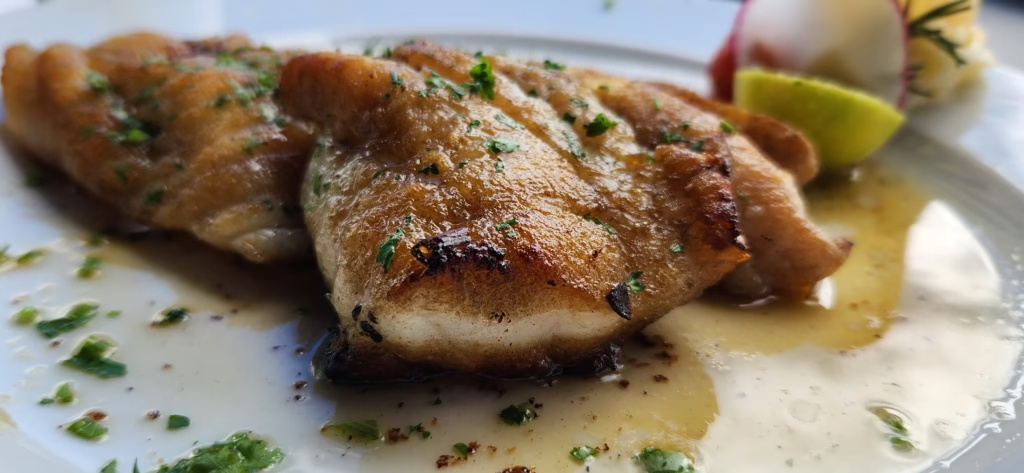
Food in Tahiti

Itinerary suggestion
Duration | Itinerary Focus | Highlights |
3 Days | The Essentials | Day 1: Papeete Market & Dinner at Les Roulottes. Day 2: Circle Island Tour (Point Venus, Blowhole). Day 3: Teahupo’o boat trip. |
4 Days | Culture & Nature | Add Day 4: Hiking the Fautaua Valley or visiting the Museum of Tahiti and the Islands. |
5 Days | Deep Exploration | Add Day 5: A full day exploring Tahiti Iti’s rugged coastline and hidden beaches by boat. |
Discover more from planetgateaway.com
Subscribe to get the latest posts sent to your email.
2 Responses